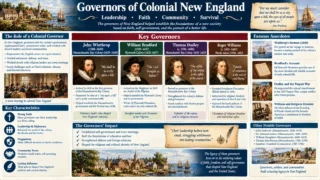
William Bradford: Plymouth

William Bradford was a Pilgrim leader and long-serving governor of Plymouth Colony. He helped draft the Mayflower Compact in 1620, navigated harsh early survival conditions, established a peace treaty with Massasoit, and authored Of Plymouth Plantation, a vital record of early American history.
John Winthrop: Puritan Leader

John Winthrop was an English Puritan lawyer and founding governor of the Massachusetts Bay Colony. Leading the 1630 migration aboard the Arbella, his "City upon a Hill" speech established a Vision of religious community and exceptionalism that shaped early New England government and society.

Colonial Executive Leaders

Colonial governors held executive power as royal representatives or elected leaders. Figures like John Winthrop and William Berkeley navigated British policy, local assemblies, and regional conflicts, laying early patterns for American executive leadership and state administration.

Wampanoag Chief and War Leader

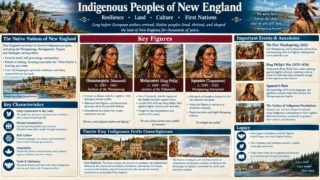
Metacomet, known to English colonists as King Philip, was a Wampanoag sachem who led a major Native coalition during King Philip’s War. Resisting colonial expansion to defend Indigenous land and sovereignty, his fierce resistance marked one of the most violent conflicts in colonial American history.

Wampanoag Leader and Colonial Ally

Ousamequin, also known as Massasoit, was a prominent Wampanoag sachem who forged a vital peace alliance with Pilgrims at Plymouth Colony. Through trade, diplomacy, and mutual defense, he secured decades of peace and aided early colonial survival while safeguarding his people’s regional standing.

Native Leaders Defending Land and Sovereignty

Indigenous leaders navigated rapid European expansion through strategic diplomacy and armed resistance. Leaders like Ousamequin fostered early alliances for survival, while figures like Metacomet led coalitions in King Philip's War to defend Native sovereignty and ancestral lands.

Puritan Minister, Author, and Smallpox Pioneer

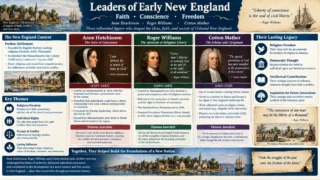
Cotton Mather was an influential Puritan minister and prolific author in Boston, Massachusetts. Best known for his controversial writings on the Salem Witch Trials, he also championed smallpox inoculation, leaving a profound mark on early American religious culture and medical science.

Champion of Religious Liberty and Rhode Island Founder

Roger Williams was an English-born theologian who championed religious freedom and the separation of church and state in Puritan New England. Banished from Massachusetts for his beliefs, he founded Providence, Rhode Island, establishing a sanctuary of tolerance and fair native relations.

Puritan Religious Dissident and Freedom Icon

Anne Hutchinson was a prominent religious leader in colonial Massachusetts who challenged Puritan clergy and promoted salvation by grace. Banished following a trial for heresy, she settled in Rhode Island and New York, becoming an enduring symbol of religious freedom and women’s voice.

Pioneers and Governors of Early Colonial Rule

Early colonial governors and political figures established administrative frameworks, led colonial militias, and guided regional governance across the fledgling American settlements.