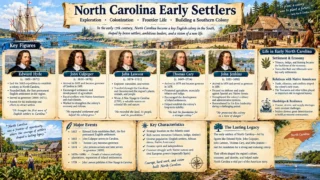
Thomas Cary: Key Figure of Cary’s Rebellion

After achieving success as a merchant, Thomas Cary became Deputy Governor of North Carolina. His opposition to Anglican dominance and alignment with Quaker factions sparked Cary’s Rebellion (1711), a major armed political conflict over colonial governance and religious rights.
John Lawson: Explorer and Naturalist of Carolina

An English explorer and surveyor, John Lawson traversed the Carolina interior, documenting native cultures and flora in "A New Voyage to Carolina" (1709). Co-founding Bath and New Bern, his capture and execution by the Tuscarora in 1711 triggered the Tuscarora War.

John Culpeper: Surveyor and Rebel Organizer

Active in 17th-century Carolina, John Culpeper served as Surveyor General before joining anti-proprietary factions in Albemarle. He gained fame for his central role in Culpeper’s Rebellion of 1677, standing trial for treason in England where he was ultimately acquitted.

Edward Hyde: Royalist Leader and Chancellor

Born in Dinton, Wiltshire, Edward Hyde served as a top advisor to King Charles I and later became Lord Chancellor under Charles II. Created Earl of Clarendon in 1661, he shaped Restoration politics before his exile, leaving a monumental legacy as author of "The History of the Rebellion."

Early Settlers Shaping Colonial North Carolina

Early European settlers in colonial North Carolina faced harsh wilderness conditions to establish agricultural communities and trade networks. Navigating complex relationships with Indigenous tribes and friction with British proprietary authorities, these pioneers laid the political, economic, and social foundations for the colony's growth.

Architects of New England Society

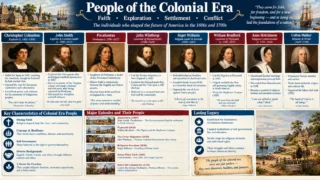
Colonial New England was defined by Puritan leaders, religious dissenters, and Indigenous sachems. Figures like John Winthrop, Roger Williams, and Metacomet shaped governance, faith, and native relations, laying the institutional and ideological foundations for early American culture.

Founders, Leaders, and Dissidents

The Colonial era shaped early American society through political leaders, religious dissidents, and Indigenous sachems. Figures like Winthrop, Hutchinson, and Metacomet navigated governance, spiritual freedom, and cross-cultural conflict, forging foundational ideas and ongoing struggles over liberty.

William Bradford: Plymouth

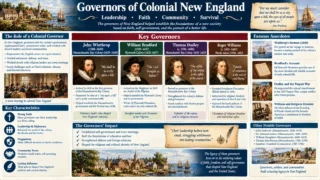
William Bradford was a Pilgrim leader and long-serving governor of Plymouth Colony. He helped draft the Mayflower Compact in 1620, navigated harsh early survival conditions, established a peace treaty with Massasoit, and authored Of Plymouth Plantation, a vital record of early American history.

John Winthrop: Puritan Leader

John Winthrop was an English Puritan lawyer and founding governor of the Massachusetts Bay Colony. Leading the 1630 migration aboard the Arbella, his "City upon a Hill" speech established a Vision of religious community and exceptionalism that shaped early New England government and society.

Colonial Executive Leaders

Colonial governors held executive power as royal representatives or elected leaders. Figures like John Winthrop and William Berkeley navigated British policy, local assemblies, and regional conflicts, laying early patterns for American executive leadership and state administration.