European History

European History

Albrecht Altdorfer and the Danube Landscape

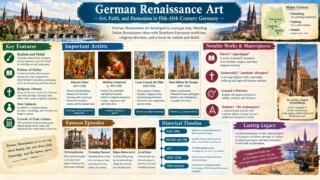
Albrecht Altdorfer was a pioneering painter, printmaker, and architect centered in Regensburg, leading the Danube School of art. He was among the first Western artists to elevate pure landscape into an independent genre, painting lush forests and dramatic skies with minimal human presence. His masterpiece, The Battle of Alexander at Issus, masterfully integrates sweeping landscape vistas with intense historical narrative. Altdorfer also served Regensburg as a city councilor and chief architect, designing fortifications and urban infrastructure alongside his artistic pursuits.
European History

Lucas Cranach the Elder’s Reformation Legacy

Born Lucas Maler in Kronach, Lucas Cranach the Elder served for decades as court painter to the Electors of Saxony. A close friend of Martin Luther, Cranach played a pivotal role in the Protestant Reformation by creating iconic portraits of Luther and producing visual art that articulated Lutheran theology. He managed a prolific workshop producing religious paintings, mythological nudes, and prints alongside his sons. Beyond art, Cranach was a dynamic public figure in Wittenberg, serving as mayor, city councilor, printer, and pharmacy owner.
European History

Albrecht Dürer: Master of Renaissance Prints

Born in Nuremberg, Albrecht Dürer became the defining figure of the German Renaissance. Trained as a goldsmith and painter, he integrated Italian concepts of perspective and human proportion with intricate Northern detail. Renowned for his revolutionary woodcuts and copper engravings, such as the Apocalypse series and Knight, Death, and the Devil, Dürer elevated printmaking to an independent art form. He served as court painter to Emperor Maximilian I and authored foundational theoretical treatises on geometry and human anatomy, securing an enduring legacy across Europe.
European History

Masterpieces of the German Renaissance

The German Renaissance saw a transformative blending of Italian Renaissance techniques with Northern European detail and spiritual depth. Spanning the 15th and 16th centuries, it was marked by groundbreaking advances in printmaking, woodcuts, and oil painting. Artists drew inspiration from humanism, nature, and the dramatic religious shifts of the Protestant Reformation. Through intricate engravings, monumental altarpieces, and penetrating portraiture, German masters established a distinct visual identity that bridged medieval traditions with scientific observation and refined realism, profoundly influencing European art history.