Its foundations rest heavily on Classical Antiquity, where ancient Greece laid the groundwork for Western philosophy and democracy, and the Roman Empire established vast legal, administrative, and engineering legacies across the continent. Following Rome’s fall and the Middle Ages, the Renaissance sparked a vibrant rebirth of art, science, and humanism, led by icons like Leonardo da Vinci and Michelangelo. This era paved the way for the Age of Discovery and the Protestant Reformation, which fundamentally reshaped Europe’s religious and geopolitical landscape.
 European History
 Antoine Watteau and the Fête Galante
Baptized on October 10, 1684, in Valenciennes, Antoine Watteau pioneered the Rococo style and created the genre of the fête galante. Drawing inspiration from Italian theater and Venetian color, his paintings depicted elegant outdoor scenes that blended theatrical romance with a subtle sense of fleeting melancholy.
European History Giovanni Battista Lulli and Royal Baroque Music
Born on November 28, 1632, in Florence, Giovanni Battista Lulli (Jean-Baptiste Lully) shaped French Baroque music at the court of King Louis XIV. He established the French opera style, directed the famous Petits Violons ensemble, and created influential ballet-comedies in collaboration with the playwright Molière.
European History Johannes Vermeer and Quiet Intimacy
Baptized on October 31, 1632, in Delft, Johannes Vermeer was a Dutch Golden Age painter celebrated for his exquisite depictions of domestic life. Utilizing luminous light, precise perspective, and subtle color harmonies, he created serene, timeless masterpieces like Girl with a Pearl Earring and The Milkmaid.
European History Rembrandt van Rijn and Dutch Masterpieces
Born on July 15, 1606, in Leiden, Rembrandt van Rijn became the defining figure of the Dutch Golden Age. Renowned for his masterful use of chiaroscuro, deep psychological insight, and dramatic storytelling, he produced iconic works such as The Night Watch alongside hundreds of expressive self-portraits and etchings.
European History Diego Velázquez and Spanish Royal Masters
Baptized on June 6, 1599, in Seville, Diego Velázquez served as the court painter to King Philip IV of Spain. Master of naturalism, light, and complex composition, he created iconic masterpieces like Las Meninas and The Surrender of Breda, earning a lasting legacy as one of Western art history's greatest painters.
European History Anthony van Dyck and Court Portraiture
Born on March 22, 1599, in Antwerp, Anthony van Dyck was a premier Flemish Baroque painter who revolutionized court portraiture. A brilliant assistant to Rubens, he later moved to England as chief court painter to King Charles I, creating elegant, aristocratic portraits that defined the visual image of 17th-century European royalty.
European History Peter Paul Rubens and Baroque Diplomacy
Born on June 28, 1577, in Siegen, Peter Paul Rubens became a master of Flemish Baroque painting and a trusted diplomat for European courts. Known for his dynamic compositions, rich color palettes, and monumental altarpieces, he established a renowned workshop in Antwerp and negotiated peace treaties between Spain and England.
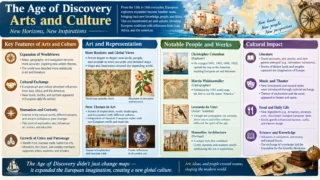
European History Arts and Culture in the Age of Discovery
During the Age of Discovery, European art and culture transformed through global trade, intellectual expansion, and royal patronage. The influx of new wealth, ideas, and exotic goods enriched the Baroque movement, fostering dramatic artistic styles that reflected power, religious fervor, and cross-cultural contact across global empires.
 European History
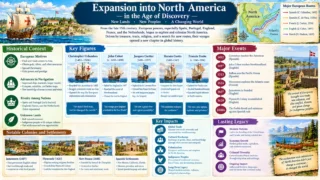
 James Oglethorpe: Founding of Georgia and Social Reform Efforts
James Oglethorpe was a British military officer, Member of Parliament, and social reformer who founded the Province of Georgia. Driven by a mission to improve conditions in British debtors' prisons, he secured a royal charter in 1732 to establish a buffer colony for the worthy poor. Leading the first settlers, he founded Savannah in 1733 and implemented progressive policies. As a military commander, he fortified the border against Spanish Florida during the War of Jenkins' Ear, while also participating in major European conflicts throughout his career.
European History William Penn: Founding of Pennsylvania and Vision of Tolerance
William Penn was an English Quaker, author, and colonial proprietor who received a charter for Pennsylvania from King Charles II in 1681. Travelling to North America in 1682, he planned and founded the city of Philadelphia. Guided by his Quaker beliefs, Penn devised a progressive governance framework centered on religious tolerance, democratic principles, and legal rights. He engaged in fair land treaties and peaceful negotiations with local Native American tribes, while prolific writings published in England actively defended Quaker doctrine and influenced early American democratic ideals.