Asian history is a vast and dynamic field that spans millennia, shaped by influential figures, powerful empires, and transformative events. Central to early East Asian history is China’s imperial legacy, notably under the Qin Dynasty, where Qin Shi Huang unified the country and initiated the Great Wall, and the golden eras of the Tang, Song, and Ming Dynasties. In Japan, the feudal period produced iconic figures such as Oda Nobunaga and Tokugawa Ieyasu, who brought an end to centuries of civil war and established two and a half centuries of peace during the Edo period.
 Asian History
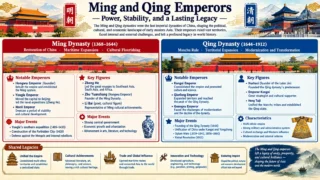
 Qianlong Emperor: Height of Prosperity and Territory
Born in Beijing, the Qianlong Emperor expanded Qing territory to its maximum extent, conquering Xinjiang and patronizing arts through the Siku Quanshu project. Though his reign marked a golden era, costly military campaigns and late-reign corruption laid seeds for future decline.
Asian History Yongzheng Emperor: Autocracy and Fiscal Reform
Born in the Forbidden City, Beijing, the Yongzheng Emperor pursued rigorous administrative and fiscal reforms to eliminate corruption. He established the Grand Council to centralize authority and instituted strict governance over officials and royal relatives, leaving a prosperous treasury.
Asian History Kangxi Emperor: Apex of Imperial Consolidation
Born in Beijing, the Kangxi Emperor ruled for over 61 years, consolidating Qing power by suppressing the Three Feudatories, absorbing Taiwan, and signing the Treaty of Nerchinsk with Russia. He expanded influence in Tibet and Mongolia while sponsoring major works like the Kangxi Dictionary.
Asian History Shunzhi Emperor: First Qing Ruler in China Proper
Born in Shengjing, the Shunzhi Emperor became the first Qing emperor to rule China proper after forces under Regent Dorgon seized Beijing in 1644. His reign established Beijing as the capital, initiated bureaucratic reforms, and enforced the queue decree amid loyalist resistance.
Asian History Chongzhen Emperor: Tragic Fall of the Ming Dynasty
Born in Beijing, the Chongzhen Emperor was the last Ming ruler. He eliminated powerful eunuch factions and attempted financial reforms, but severe famines, fiscal exhaustion, peasant revolts led by Li Zicheng, and Manchu pressure forced him to commit suicide as Beijing fell in 1644.
Asian History Hong Taiji
Born near Hetu Ala, Hong Taiji expanded Later Jin power, renamed his people "Manchu," and founded the Qing dynasty in 1636. He established the Eight Banners system, integrated Han and Mongol institutions, and subjugated Joseon, laying the essential groundwork for conquering China.
Asian History Wanli Emperor: Long Reign of Reform and Decline
Born in Shuntian Prefecture, the Wanli Emperor had the longest reign of the Ming dynasty. Early reforms by Zhang Juzheng strengthened finances, and Wanli directed the Three Great Campaigns. However, prolonged political feuds over succession led to his withdrawal from governance and eventual state decline.
Asian History Hongzhi Emperor: Governance of the Ming Restoration
Born in Beijing, the Hongzhi Emperor ushered in a peaceful era known as the Hongzhi Restoration. Guided by Confucian ethics, he cut government spending, lowered taxes, improved legal codes, and maintained harmonious relations with his officials while avoiding costly foreign military campaigns.
Asian History Emperor Yingzong: Crisis and Royal Restoration
Born in Beijing, Emperor Yingzong reigned twice as the Zhengtong and Tianshun emperors. His early reign was marked by the Tumu Crisis, where he was captured by Oirats. After years of house arrest, he reclaimed his throne in a coup and later abolished human sacrifice in royal burials.
Asian History Xuande Emperor: Stability and Cultural Renaissance
Born in Beijing, the Xuande Emperor maintained political stability by reforming administration and reducing taxes with the help of Grand Secretaries. He suppressed a major royal rebellion, promoted arts like bird-and-flower painting, and oversaw the final maritime voyage of Zheng He.