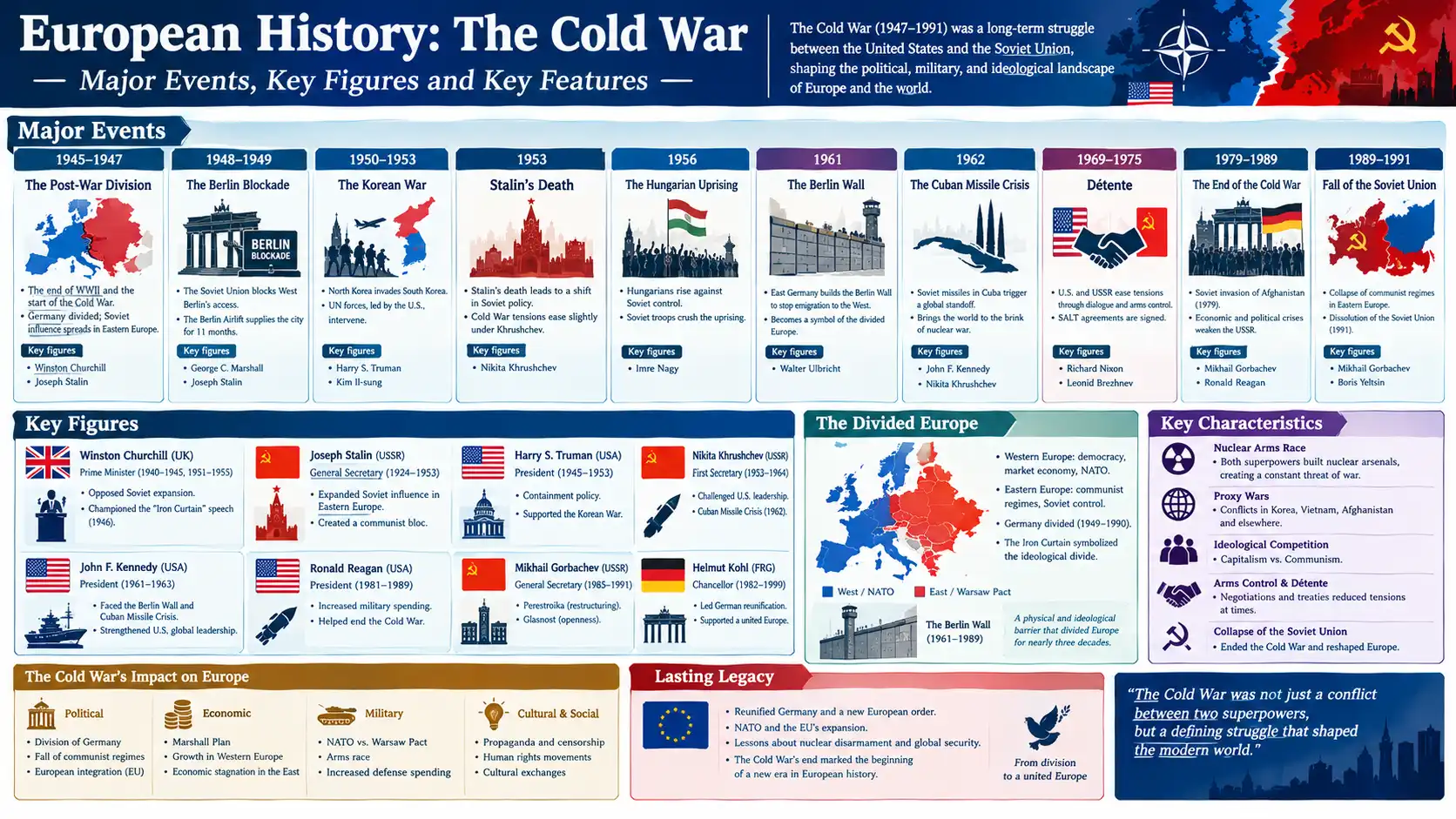
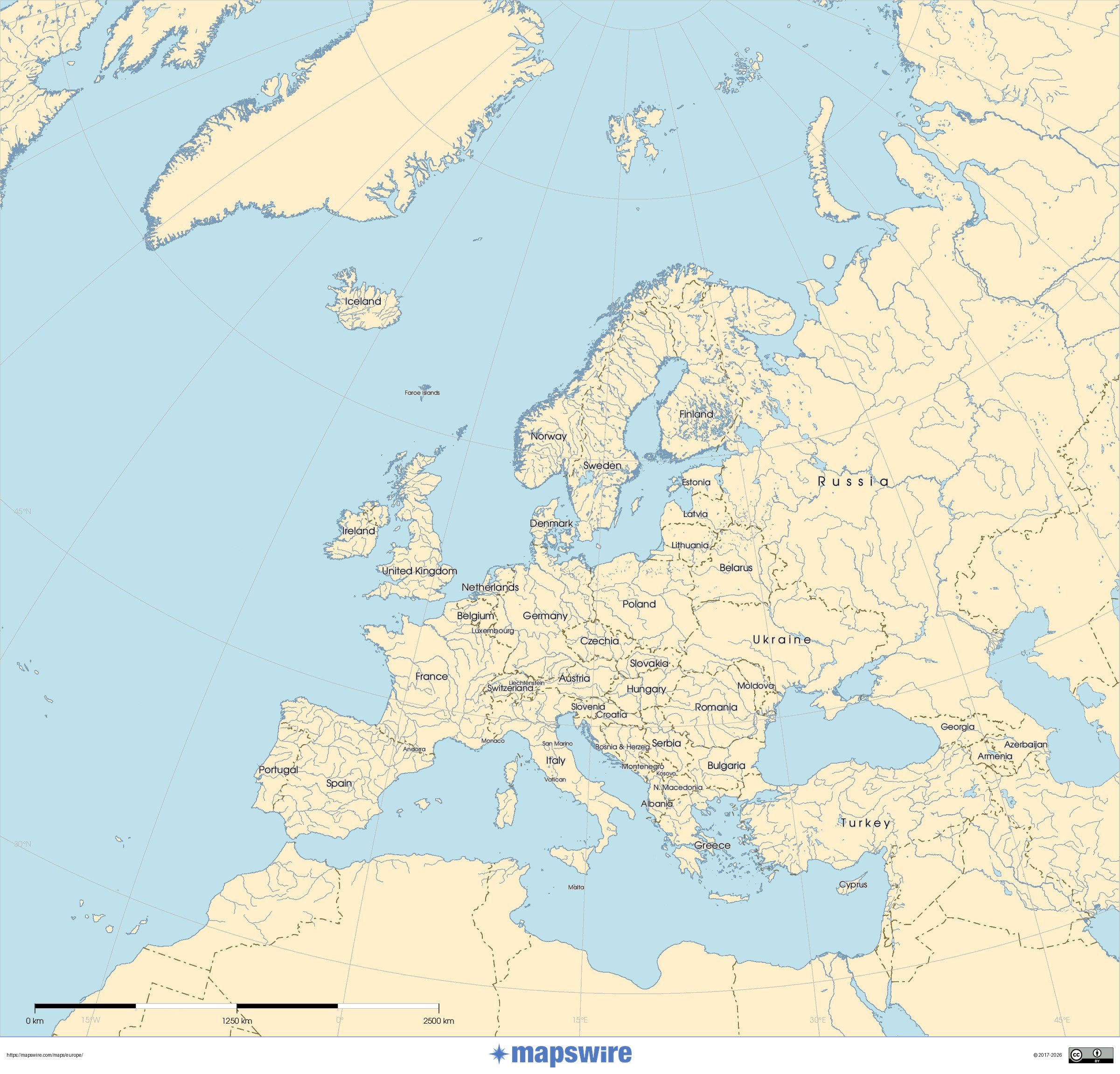
The Cold War profoundly transformed Europe, dividing the continent into Western and Eastern blocs along the Iron Curtain. Key defining moments included the 1948 Berlin Blockade and Airlift, the construction of the Berlin Wall in 1961, and Soviet interventions in Hungary in 1956 and Czechoslovakia in 1968. Beyond geopolitical tension, the era fostered diplomatic shifts like Willy Brandt's Ostpolitik, alongside resistance movements such as Poland's Solidarity. Ultimately, grassroots activism and systemic economic strain culminated in the fall of the Berlin Wall in 1989 and the collapse of the Soviet Union, paving the way for European integration.

Comments