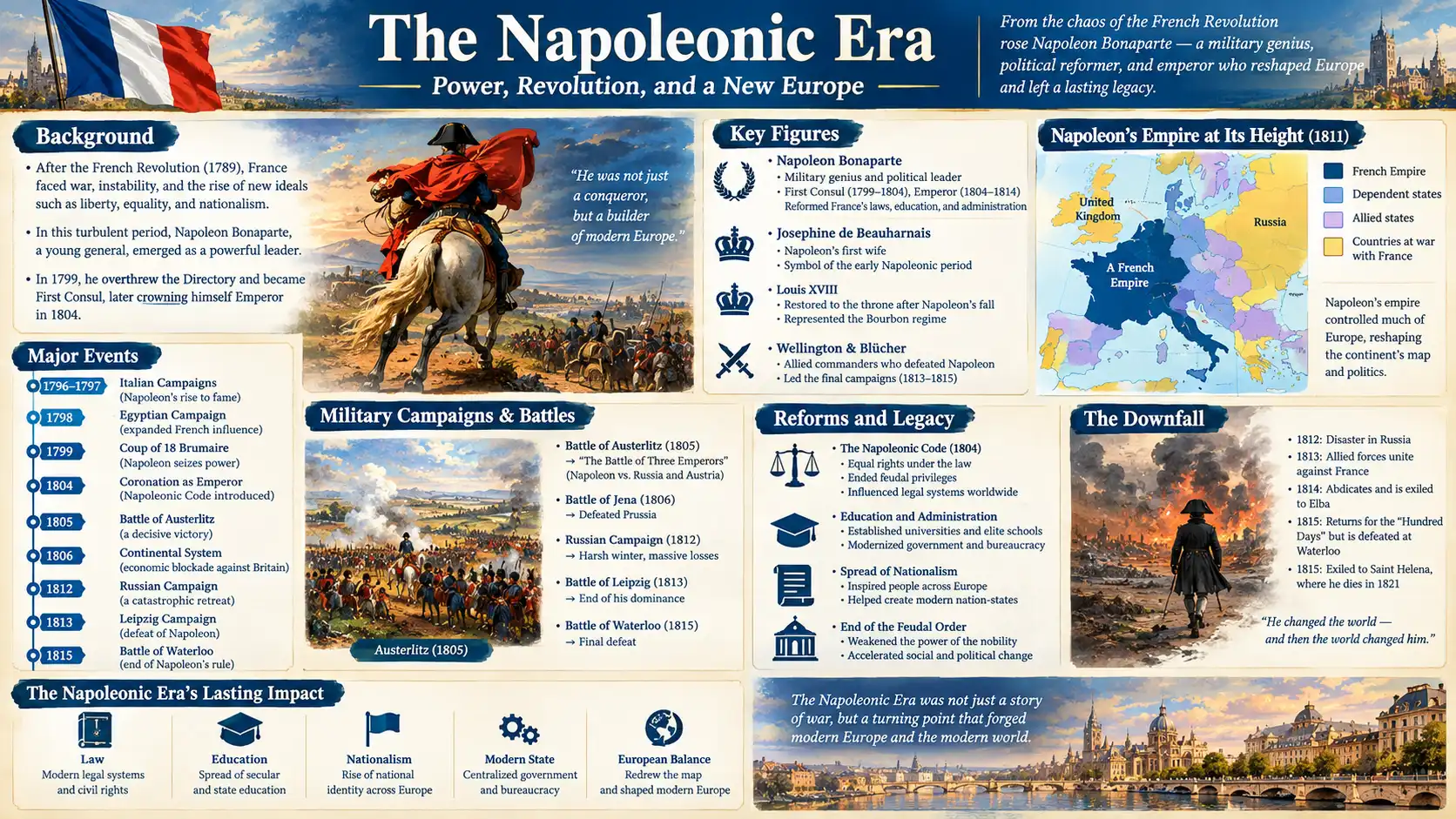
Napoleonic Era
The Napoleonic Era was defined by the rise of Napoleon Bonaparte, who seized power in 1799, established the French Consulate, and crowned himself Emperor in 1804. Through brilliant tactical campaigns, France expanded its influence across Continental Europe, winning decisive victories at Austerlitz, Jena, and Wagram. Napoleon restructured legal systems with the Napoleonic Code and reformed European administration, education, and finance. However, catastrophic military failures during the 1812 Russian campaign and resistance from the Sixth Coalition led to his initial abdication in 1814. Following a brief return during the Hundred Days, his ultimate defeat at the Battle of Waterloo in 1815 ended French hegemony, permanently reshaping European geopolitics, nationalism, and institutional governance.
Time table
| Type |
|
| Display |
|
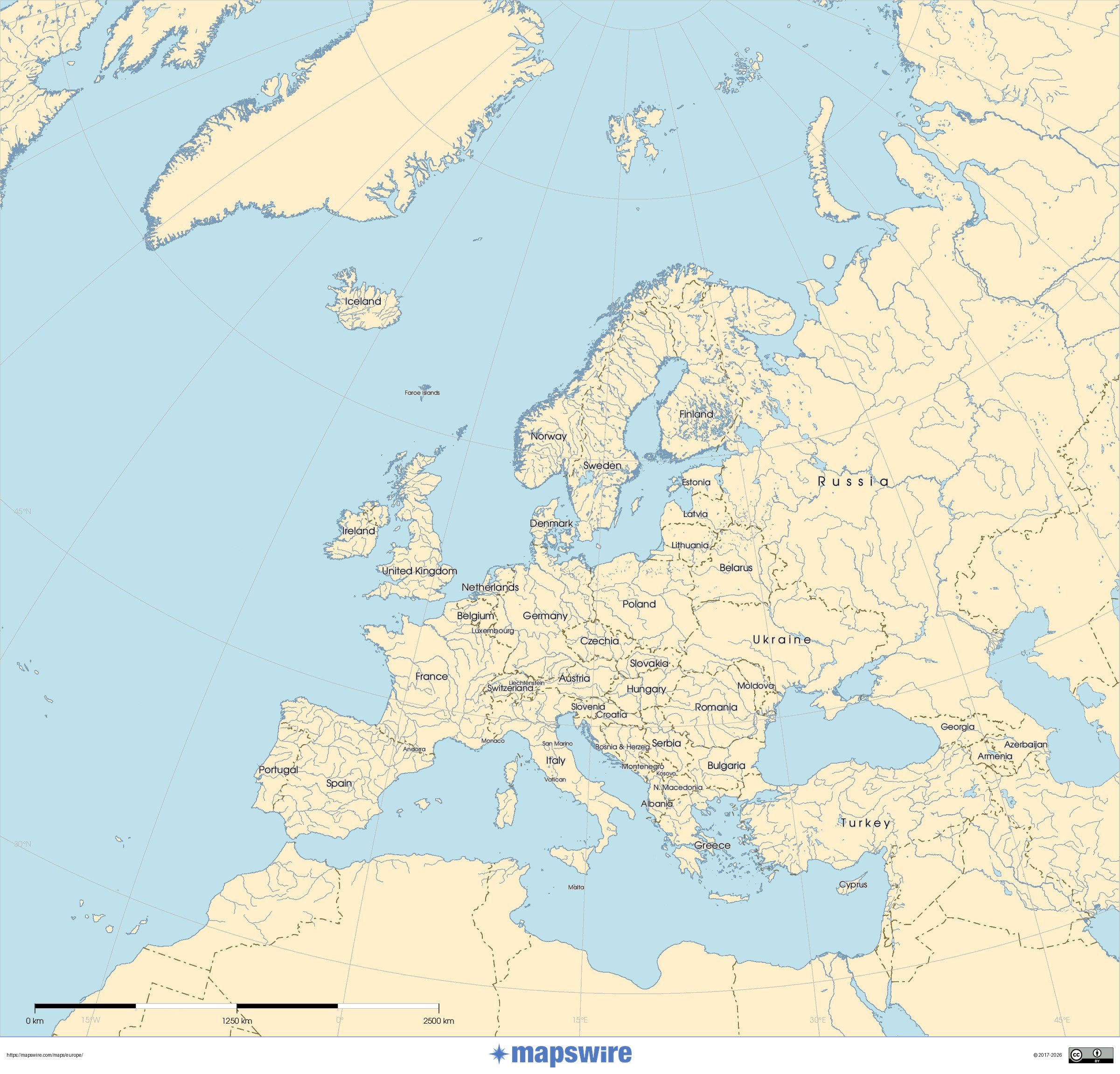
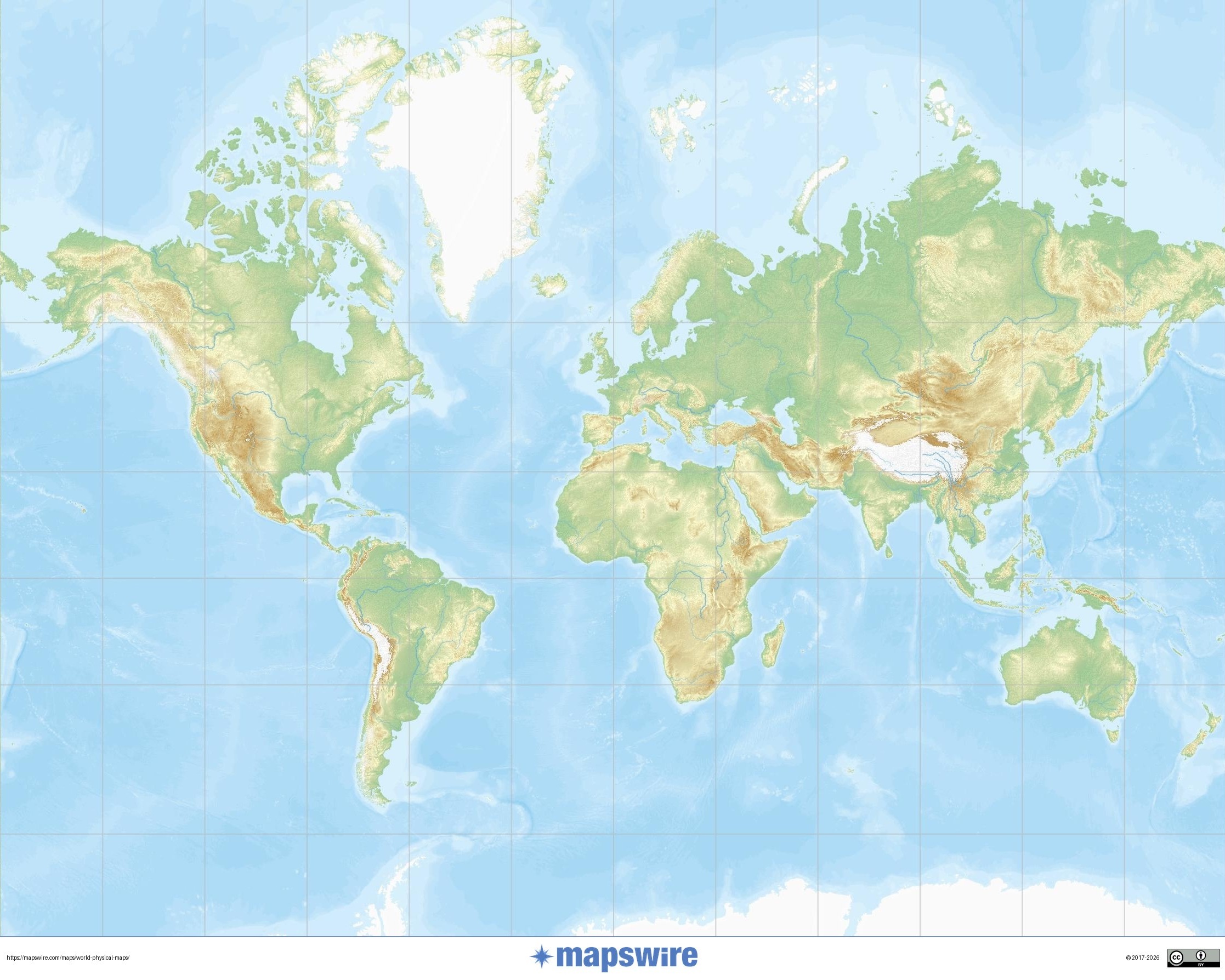
Map
EuropeWorld
| Type |
|
| Display |
|
| Type |
|
| Display |
|
Link
Other languages
Classification
| Genre | |
| Affiliation |
Group
| Event | |
| Team | |
| Competitions |
List
Search:

Comments