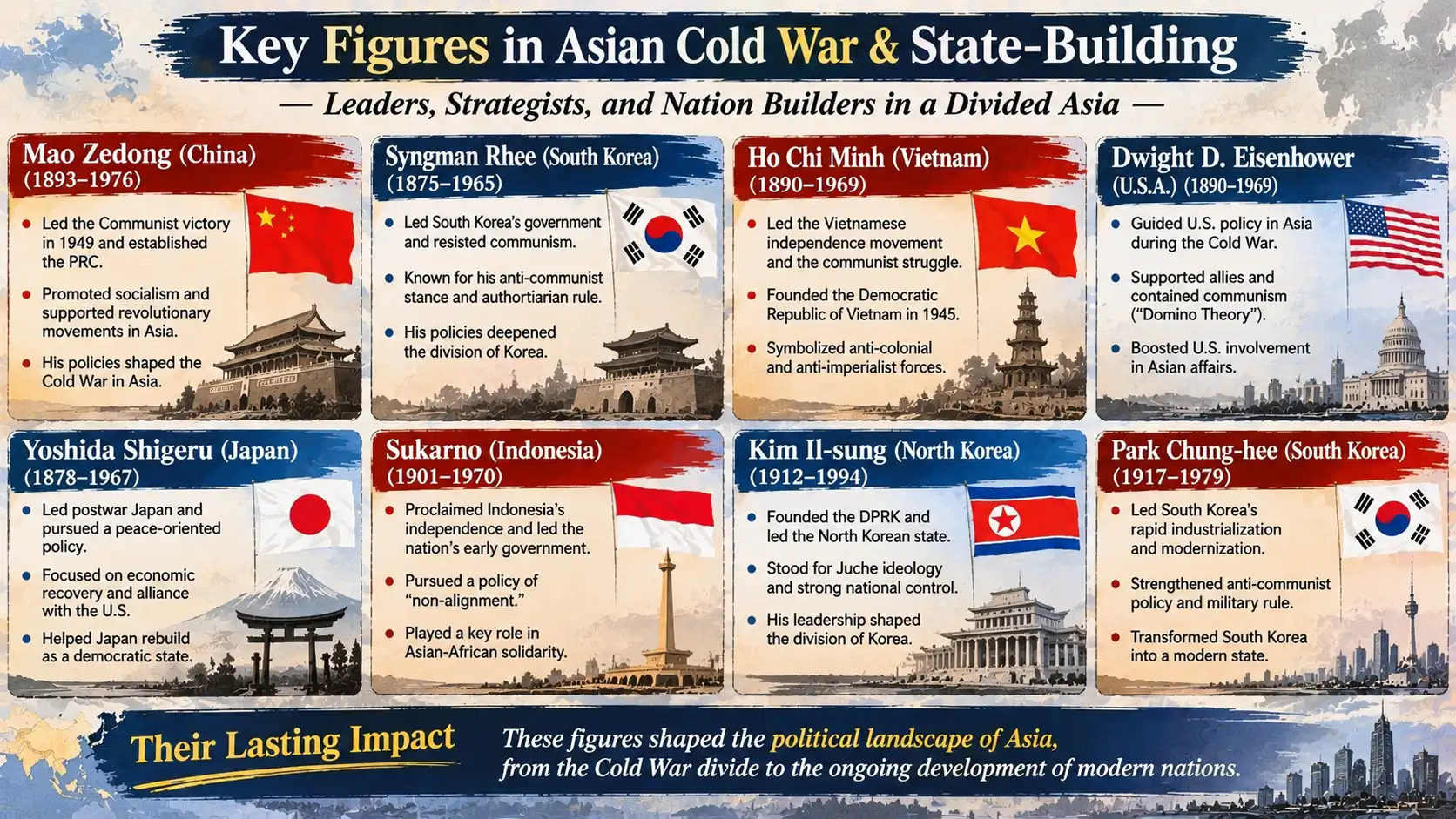
Following World War II, Asian leaders played decisive roles in shaping post-colonial statehood amid Cold War tensions. Figures such as Syngman Rhee, Kim Il Sung, Mao Zedong, Ho Chi Minh, and Sukarno navigated ideological rivalries between the United States and the Soviet Union to establish sovereign authority. Through proxy conflicts, nation-building initiatives, and centralized governance, these prominent figures solidified political control, pursued economic reconstruction, and transformed the geopolitical landscape of modern Asia.
Comments